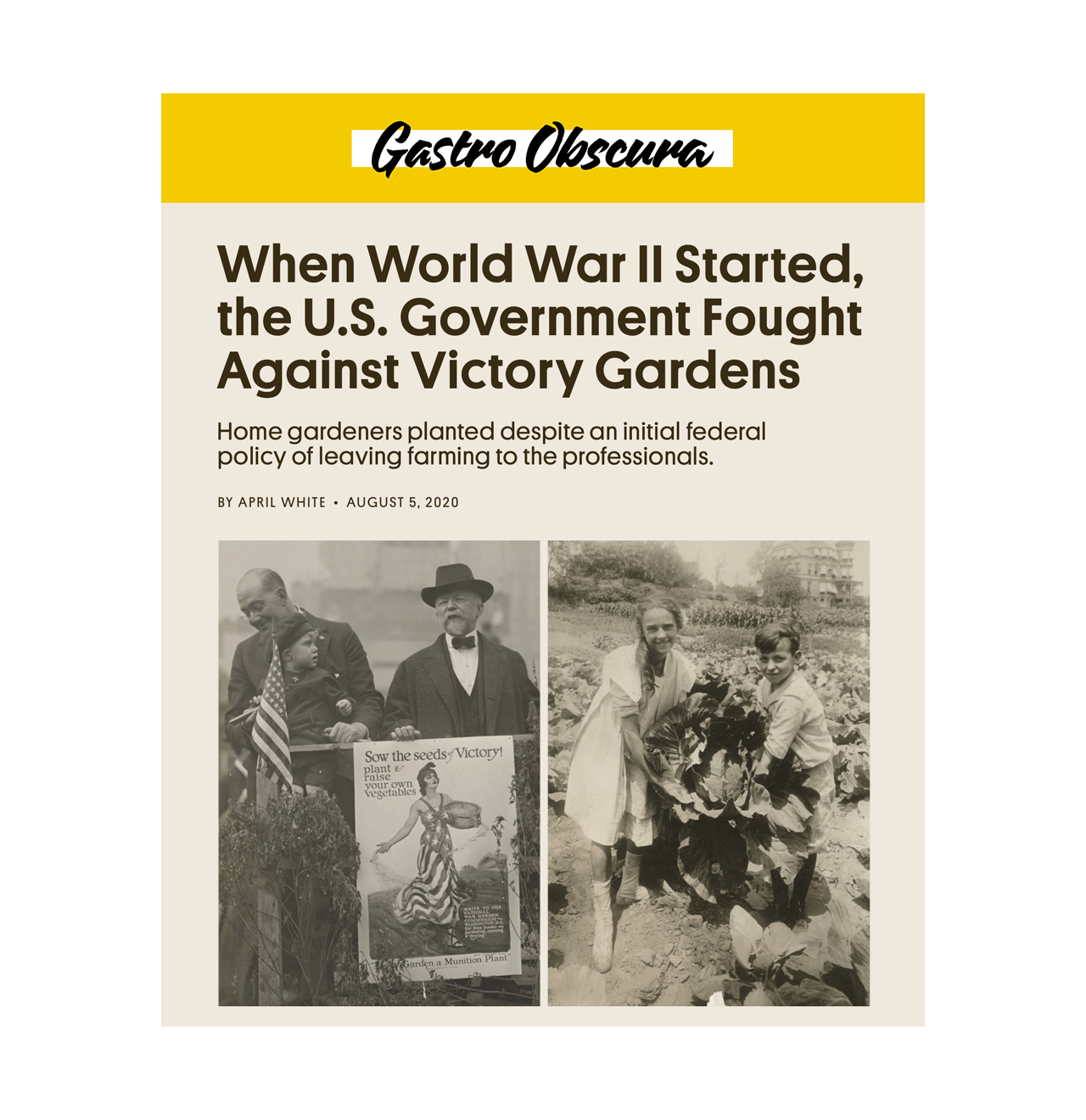
When the US Government Fought Against Victory Gardens
First Lady Eleanor Roosevelt wanted to plant vegetables on the White House lawn. It was early 1942 and American troops were departing daily for the battlefields of Europe. Her garden would be a small act of patriotism, a symbol of shared commitment and sacrifice recognizable to anyone who had lived through the Great War 25 years earlier—to anyone, that is, except Claude Wickard. President Franklin Roosevelt’s new Secretary of Agriculture believed the war gardens of 1917 and 1918 had been a waste.
When the Department of Agriculture’s Victory Gardens program debuted, it was not the national call to action and triumph of government messaging that we remember it as today. It was, in fact, its opposite: The country, newly at war, needed its farmers. But it did not need its city gardeners.
role: Author outlet: Gastro Obscura publication date: August 2020 category:Food