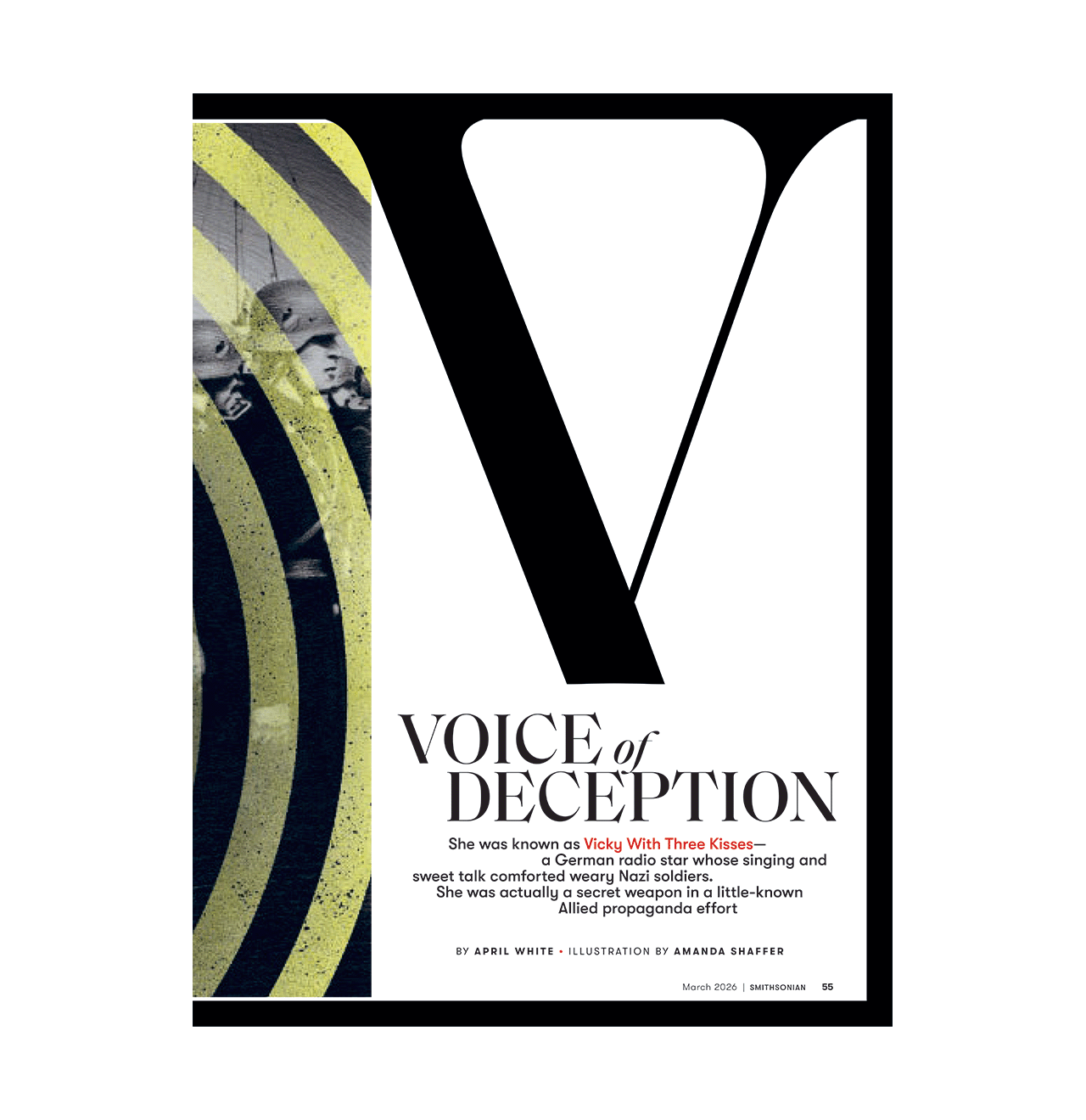
“Hallo, Jungs. Hier bin ich wieder, eure Vicky mit drei Küssen.” “Hello, boys. Here I am again, your Vicky With Three Kisses.” Even on nights when the radio was filled with noise as Allied and Axis forces attempted to jam their enemies’ broadcasts, the woman’s meaning was unmistakable. She pursed her lips and sent a trio of smooches across the airwaves.
A German sailor listening to Vicky might imagine this was his girlfriend or wife waiting at home, as she had been for years while the war stretched through the summer of 1944. For those with no one to return to, the voice belonged to a blonde-haired and blue-eyed dream. “Wouldn’t it be nice if we could sit together now in a cozy little café, with a nice glass of Rhine wine, and we gaze into each other’s eyes, so deep, so warm,” she cooed in an upper-crust Berliner accent. She imagined a dance as a big band launched into “I Love You Truly,” the popular American song’s lyrics sung in German.
Vicky was creating a fantasy world with her kisses while reminding the men of the possibilities their real lives had held before they’d been ordered into cramped U-boats silently patrolling just off the British coastline. Was the Nazi cause they were fighting for worth the sacrifices they had made? Was it worth the sacrifice they might still be asked to make?
When the music faded, Vicky returned. Her words were sad now. “We don’t have much time left. And who knows when and where we will see each other again?”
In a radio studio 40 miles north of London, the dark-haired, dark-eyed, half-Jewish actress playing the role of Vicky stepped away from the microphone. Although she had playfully asked the question, Agnes Bernauer, 21, certainly hoped she would never meet the likes of her listeners again. She had fled from the Nazis once before. Now she was fighting back with the war’s newest weapon.
role: Author outlet:Smithsonian Magazine publication date: March 2026 category:History