The call went out from WREC’s studios in downtown Memphis at 6:57 p.m. Central War Time: Doctors and nurses were urgently needed in communities south and west of the city. That was it. That was all the information the station was allowed to provide, despite the ongoing threat.
Three hours earlier, dark storm clouds over northern Mississippi had twisted themselves into a powerful funnel touching down near the town of Berclair and carving a path of destruction more than 110 miles long. By the time WREC issued its cryptic message, another eight tornadoes had ripped through neighborhoods, factories, forests, and farmland within a 100 miles of Memphis. The deadly storm would continue to ravage the central and southern United States from Illinois to Alabama until just after 9:30 p.m. on the night of March 16, 1942.
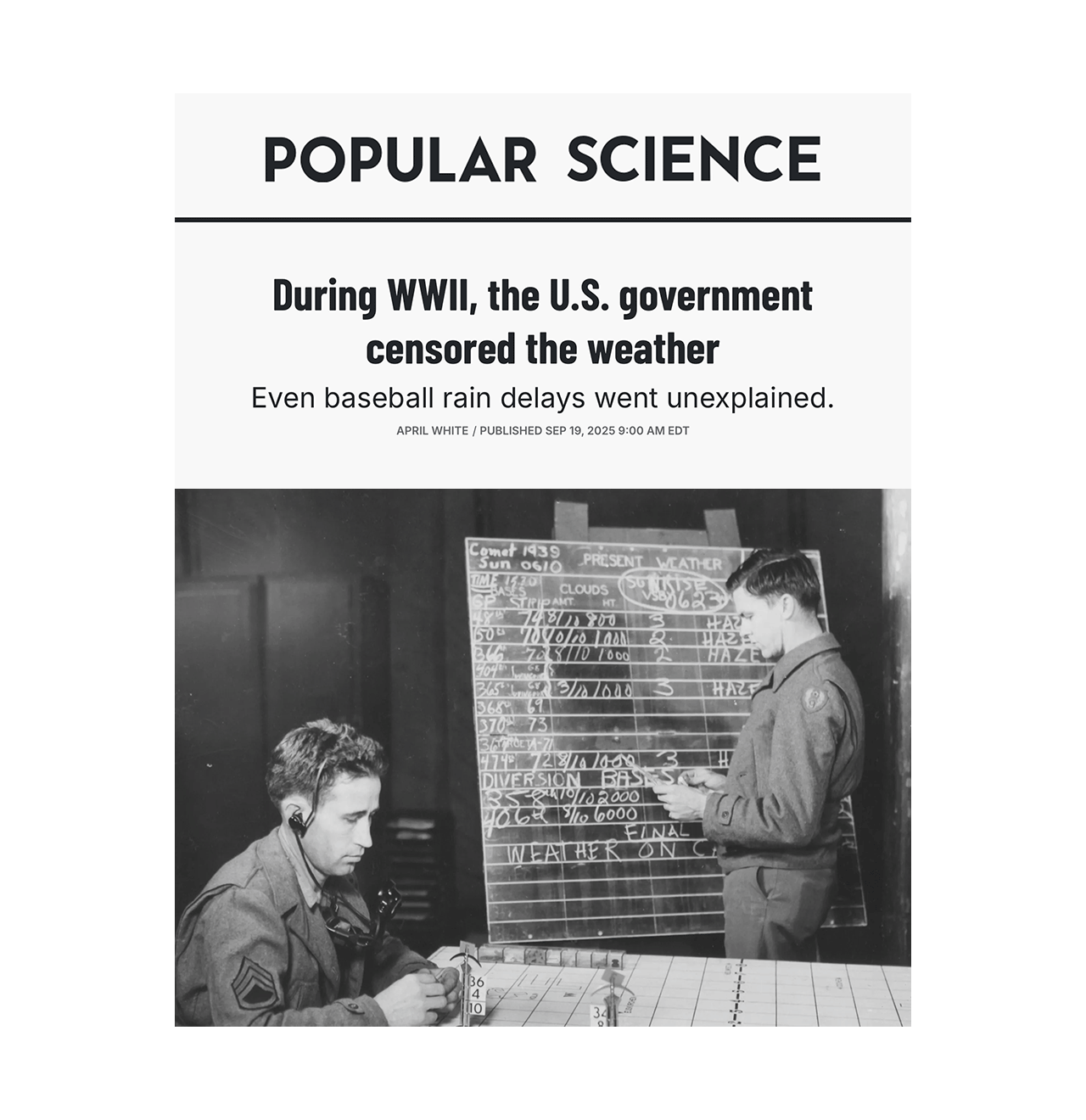
At 10:55 p.m., the United States Office of Censorship in Washington, D.C., gave the Tennessee radio station permission to inform the public about the tornado outbreak. For almost two years in the 1940s, the federal government exercised strict control over such weather reports, a World War II-era precaution that caused unexpected havoc on the home front, including on that dark March night in Tennessee.
role: Author outlet:Popular Science publication date: September 2025 category:History